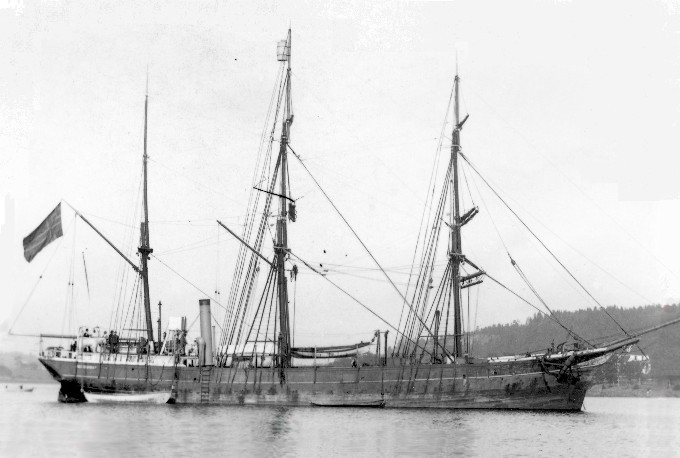
HEKLA
Skipstype
Byggeår
1872
Nasjonalitet
 Norge
NorgeHjemmehavn
Tønsberg
Mønstringsdistrikt
Tønsberg
Verft
Byggested
Drammen, Holmen
Tonnasje og dimensjoner
Bruttotonnasje
355
Nettotonnasje
213
Dødvekt
–
Drektighet
147 cl
Skrog LOA
139,6’
Skrog LBP
–
Bredde
28,9’
Dybde (i riss)
16,5’
Dypgående
15,6’
Funksjon (norsk)
Fartøy for fiske og fangst
Ombygd
–
Maskin/motor
Fremdrift
Seil
Maskin-/motortype
Seil, rigget som bark
Kjeler
Kjeletyper
1 x hjelpe kjel (Ildrørskjel/fire tube boiler), kullfyrt
Hastighet
7,0 knop knop
Lastehåndtering
Fangstbåt
Manøvreringssystemer
Ror og seil.
Dekksmaskineri
Dampdrevet ankerspill og vinsjer
Kommunikasjonsutstyr
Flagg, lyd og semaforering.
Navigasjonsutstyr
Sekstant, kart, kompass og kronometer
Klassifisering
DnV A2*-1,7-2L
Land / nasjonalitet
Norge
Kjøpt
1896
Solgt
1898
Kilde: http://gdl.cdlr.strath.ac.uk/scotia/index.html, boken ”DAMP- Damskipets æra i Vestfold”
1872 Bygget som bark HEELA (HEKLA) ved Jørgensen & Knudsen, Holmen, Drammen for S. S. Svendsen.
1896 Solgt til N. Bugge, Tønsberg.
1898 Solgt til Actieselskabet Sæl- og Hvalfangerskib 'Hekla' (Maximilian C. Tvethe), Kristiania (Oslo).
1900 Solgt til A/S Hecla (Anders Marcussen), Sandefjord.
1902 Solgt til William S. Bruce for £2.620 (kr. 45.000). Seilt over Nordsjøen til verkstedet Ailsa Shipbuilding Company, Ayrshire, Troon, Scotland, hvor hun ble ombygget etter anvisninger av skipskonstruktør George Watson. Omdøpt SCOTIA. Skuten var blitt anbefalt av Fridtjof Nansen og inspisert av Colin Archer. Det viste seg for øvrig at skuten var i dårligere forfatning innvendig enn tidligere antatt. Skuten ble forsterket midtskips med 25 tommers tykke tre spanter for å tåle trykket av isen i Antarktis, da den ble utstyrt for the Scottish National Antarctic Expedition av 1902-04. Under sjøkaptein Thomas Robertsons kommando seilte hun mot Sydpolen 02/11-1902.
1904 Hun returnerte til Millport Marine Biological Station 21/07-1904.
Etter ekspedisjonen og frem til 1909 var den i fangst.
1909 Virker som patruljeskip for varsling av isfjell på Newfoundlandsbankene. Hun endte til slutt som fraktskip mellom England og Frankrike.
1916 Gikk tapt ved brann og satt på land ved Sully på Scillyøyene 18/01-1916.
1872 Built as barque HEELA (HEKLA) by Jørgensen & Knudsen, Holmen, Drammen for S. S. Svendsen.
1896 Sold to N. Bugge, Tønsberg.
1898 Sold to A/S Sæl- og Hvalfangerskib Hekla (M. C. Tvethe), Kristiania (Oslo).
1900 Sold to A/S Hecla (Anders Marcussen), Sandefjord.
1902 Sold to Mr. William S. Bruce for £2.620 (NOK 45.000). Seiled across the North Sea to the shipyard Ailsa Shipbuilding Company, Ayrshire, Troon, Scotland, where she was prepared for the Antarctic ice under supervision of naval architect George Watson. Renamed SCOTIA. She was recommended by the well known Norwegian Mr. Fridtjof Nansen and inspected by him and Mr. Colin Archer. The constructor and builder of FRAM. During upgrading it was detected that the internals of the ship was in worse state than expected. She was strengthened amidships with new 25 inches thick wooden beams to resist the pressure of ice in the Antarctica. She was equipped for the Scottish National Antarctic Expedition of 1902-04. Under Captain Thomas Robertsons command she sailed bound for the South Pole area on 02/11-1902.
1904 She returned to the Millport Marine Biological Station on 21/07-1904.
After the end of the expedition and until the year of 1909 she was engaged in seal hunting.
1909 From this year she acted as a patrol ship for notifying and warning of iceberg on the Newfoundland Banks, until she ended up as a regular freighter between England and France.
1916 Lost during fire and landed at Sully on the Scilly Islands on 18/01-1916.